Guide

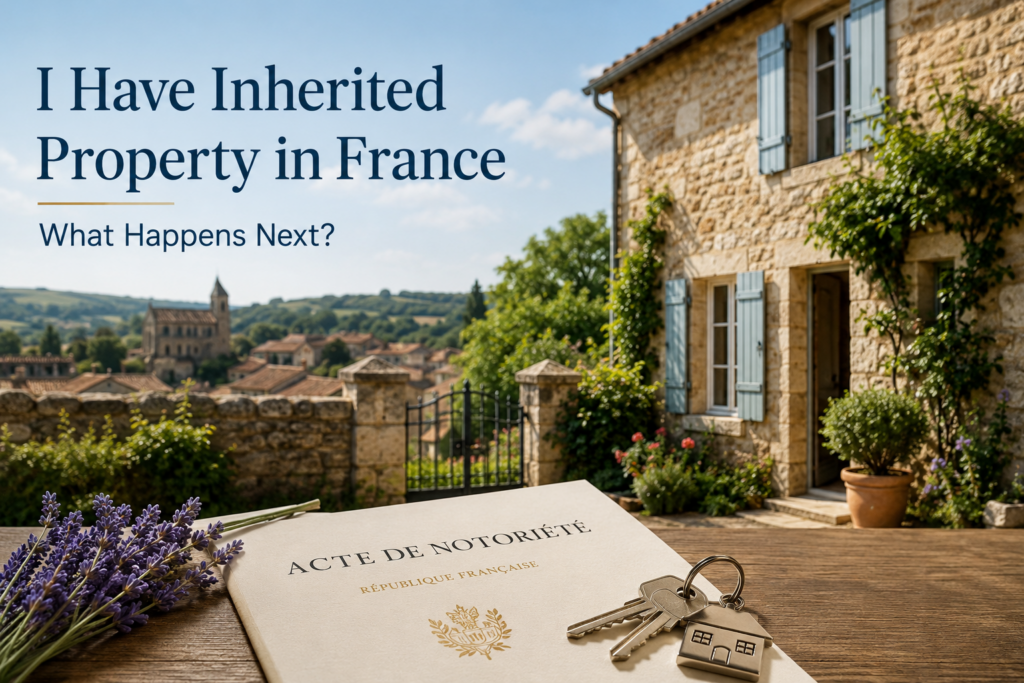
I Have Inherited Property in France – What Happens Next?

Inheriting a property in France is very different from inheriting one in the UK. Learn what happens after a death, when ownership transfers, whether you can sell immediately, and the key steps every UK beneficiary should understand before making decisions about their inherited French property.

Inheriting a property in France can feel overwhelming, particularly if you live in the UK. Unlike England and Wales, ownership does not simply transfer once probate has been granted. Instead, the French succession process must first establish the legal heirs, calculate any inheritance tax due, and formally transfer ownership through a French notary.

The good news is that, whilst it can seem complex, each stage follows a logical process. Once you understand what happens and what decisions you’ll need to make, it becomes much easier to navigate.

Need help with the earlier stages?

📖 French Succession Explained

📖 I Am an Executor


Step 1 – A French Notary Must Complete the Succession

Even if probate is taking place in the UK, French property is dealt with under French law.

Your first priority is ensuring a French notary (Notaire) is handling the succession. They will:

  • Identify the legal heirs.
  • Gather information about the estate.
  • Calculate French inheritance tax.
  • Prepare the legal documents transferring ownership.

If a notary has not yet been appointed, this should be your first step.

Related Guide

📖 Finding a French Notary


Step 2 – Ownership Does Not Transfer Immediately

One of the biggest surprises for many UK families is that you do not automatically become the registered owner on the day someone dies.

Instead, ownership transfers through a series of legal documents prepared by the notary.

Only once these documents have been signed and registered will the French Land Registry update its records.

Until then:

  • you may not yet be able to sell;
  • estate agents may refuse to market the property;
  • banks and insurers may require additional documentation.

Patience is often required during this stage.


Step 3 – Decide What You Want to Do With the Property

Every family is different.

Generally, there are four common options.

Keep the Property

Many families choose to retain a holiday home or family property.

Remember you’ll become responsible for:

  • insurance;
  • property taxes;
  • maintenance;
  • utilities;
  • repairs.

Rent the Property

Some heirs choose to generate income through long-term or holiday lets.

Before doing so, ensure:

  • ownership has legally transferred;
  • all heirs agree (where applicable);
  • you understand any French tax implications.

Professional advice is recommended before renting inherited property.


Sell the Property

Selling is extremely common, particularly where multiple heirs inherit together.

However, you normally cannot sell until the succession has been completed and ownership has transferred.

Once this has happened you’ll usually need:

  • your title deeds;
  • proof of ownership;
  • an estate agent or notary acting as agent.

Related Guides

📖 Selling an Inherited Property in France

📖 Obtaining Your French Property Deeds


Leave the Property Undecided

There is no obligation to immediately sell.

Some families prefer to complete the succession first before deciding together what happens next.


Step 4 – If There Are Multiple Heirs

Many French estates involve several children inheriting together.

This means everyone usually owns a share of the property.

Major decisions such as selling generally require agreement between the co-owners.

If one person wishes to keep the property, it may be possible to buy out the others, although professional legal advice should be obtained.


Step 5 – Don’t Forget Insurance

Once someone has died, existing insurance arrangements may no longer be suitable.

Make sure:

  • the insurer has been informed;
  • the property remains insured;
  • vacant property conditions are understood;
  • security requirements are met.

An uninsured property can become extremely expensive if something goes wrong.


Step 6 – Secure the Property

If nobody lives nearby, try to ensure someone periodically checks the property.

Things to consider include:

  • locking all windows and doors;
  • redirecting post where possible;
  • checking for leaks;
  • ensuring utilities remain safe;
  • arranging basic maintenance.

An empty property left unattended for months can deteriorate surprisingly quickly.


Step 7 – Keep Copies of Every Document

Throughout the succession you’ll receive numerous important documents.

Keep copies of:

  • the Acte de Notoriété;
  • inheritance tax paperwork;
  • title deeds;
  • valuation reports;
  • insurance documents;
  • correspondence with the notary.

Having everything organised will make selling, insuring or managing the property much easier later.

Related Resource

📖 French Succession Workbook & Checklist


Frequently Asked Questions

Can I visit the property before the succession finishes?

Usually yes, provided you have lawful access and are not preventing other heirs from exercising their rights.


Can I sell immediately?

Usually not.

The succession normally needs to be completed first and ownership registered before a sale can proceed.


Do I have to use the same notary who handled the succession to sell?

No.

Whilst many families continue using the same notary, you are generally free to instruct another notary for the sale if you wish.


Can one heir keep the property?

Yes.

If all heirs agree, one person may be able to purchase the others’ shares.


Will I receive title deeds?

Yes.

Once ownership has been transferred and registered, the notary can arrange copies of the updated title deeds, which you’ll often need if you later decide to sell.


Final Thoughts

Inheriting a property in France involves far more than simply receiving the keys. Before any decisions about selling, keeping or renting can be made, the French succession must establish ownership and complete the legal transfer.

Taking the process one step at a time—and keeping good records throughout—can make what initially feels like a daunting experience much more manageable.

If you’re unsure what happens next, start by ensuring the succession is progressing correctly and don’t be afraid to ask your notary to explain each stage. A clear understanding now can save significant time, cost and frustration later.

Need tailored guidance for your situation?

Book a free consultation and talk through the estate, documents, professionals and next steps.

Book a Free Consultation