Guide
Selling a Property During a French Succession | A Guide for UK Families
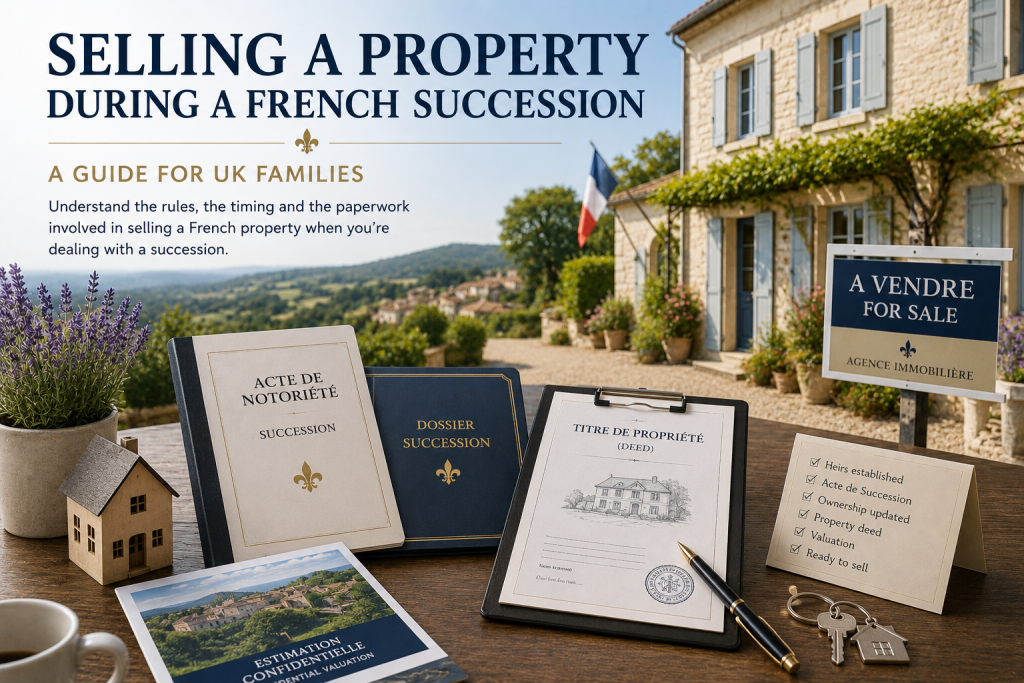
Selling a property in France after the death of a loved one is rarely as simple as putting it on the market. This guide explains when you can sell, the role of the notaire and estate agent, how usufruct affects the process, and which documents you'll need before a buyer can proceed.
For many families, selling the French property is one of the final stages of the succession.
Although the process is broadly similar to selling a property in the UK, there are some important differences that can catch overseas families by surprise.
The biggest of these is that you may not be legally able to complete the sale until the succession has progressed sufficiently and the property’s ownership has been updated.
Find an Estate Agent Early
One of the first things you should do is find a local estate agent.
Even if the property cannot yet be sold, obtaining valuations early will help your notaire prepare the succession paperwork.
If you haven’t already, read our guide:
→ Working with Estate Agents in France
Estate agents can also:
- Advise on the local property market.
- Suggest improvements before marketing.
- Recommend contractors.
- Arrange viewings once you’re ready.
- Look after keys while you’re in the UK.
Your Notaire May Also Sell Property
Many French notaires have their own property sales department (service négociation immobilière).
This means they can sometimes:
- Value the property.
- Advertise it.
- Conduct viewings.
- Negotiate with buyers.
- Handle both the succession and the sale.
Not every notaire offers this service, so ask whether they have an in-house property department or whether they recommend a local estate agent.
It’s still perfectly normal to use an independent estate agent if you prefer.
If the Property Was Already Yours
Some families discover that they already owned the property through an earlier arrangement involving usufruct and bare ownership (nue-propriété).
For example, a parent may have retained the right to live in the property for life (usufruct), while their children became the bare owners when the property was originally purchased.
When the usufruct ends on death, the bare owners generally become the full owners automatically under French law.
Although this means the property may not need to pass through the succession in the same way as property owned outright by the deceased, you’ll still usually need the notaire to complete the necessary land registry formalities before a sale can proceed smoothly.
If you’re unsure whether this applies to you, ask your notaire or avocat to explain how the property is currently registered.
If the Property Belonged to the Deceased
Where the deceased owned the property outright, the process is different.
In most cases you’ll need to wait until:
- The heirs have been established.
- The succession has progressed.
- The notaire has prepared the necessary succession deeds.
- The property’s ownership has been updated in the French land registry.
Only then can the sale usually complete.
Because these formalities take time, it’s often worth beginning preparations for the sale well in advance.
You’ll Need the Property Deed
Before a property can be marketed or sold, you’ll often be asked for the property’s title deed (titre de propriété).
If you don’t already have it, your notaire or avocat can usually help obtain a copy.
In our own experience, having an avocat proved extremely helpful when gathering documents and dealing with local administration.
Estate agents will often request the deed before advertising the property.
Obtain a Valuation
If the property forms part of the succession, your notaire will usually need a market valuation.
In many successions, two independent valuations are obtained.
One may come from the notaire (where they provide property services), while the other is commonly obtained from an independent estate agent.
If you don’t intend to sell the property, you may be charged for providing this valuation.
Preparing the Property for Sale
Don’t wait until the succession is complete before thinking about presentation.
Consider:
- Changing the locks.
- Clearing the property.
- Removing food and perishables.
- Carrying out basic repairs.
- Tidying the garden.
- Collecting important documents.
- Checking for maintenance issues.
Many buyers form an opinion within minutes of arriving, so even modest improvements can make a significant difference.
Leave Keys with Someone Local
If you live in the UK, consider leaving a set of keys with:
- Your estate agent.
- Your avocat.
- A trusted neighbour.
- A family member living locally.
This avoids repeated trips to France simply to allow access for viewings, surveys or contractors.
Other Documents You May Need
Depending on the property, your notaire or estate agent may ask for:
- Title deed (Titre de propriété).
- Energy Performance Diagnostic (DPE).
- Other mandatory property diagnostics.
- Property tax notices.
- Succession documents.
- Identification.
- Planning or building documentation (if relevant).
Your estate agent will usually explain which documents are required before marketing begins.
Final Thoughts
Selling a French property is often one of the last major steps in a succession.
Although it can be tempting to wait until everything is finished before speaking to an estate agent, beginning preparations early can save considerable time later.
Whether the property formed part of the succession or you became the full owner following the end of a usufruct, working closely with your notaire, estate agent and—where appropriate—your avocat will help ensure the sale progresses as smoothly as possible once the legal formalities have been completed.