Visiting France After a Bereavement Checklist
Prepare for your trip to France with our practical bereavement checklist for UK families managing a French succession. From securing the property and meeting your French notary to locating important documents, recording the property's condition and arranging repairs, this printable guide helps ensure nothing important is overlooked during your visit.
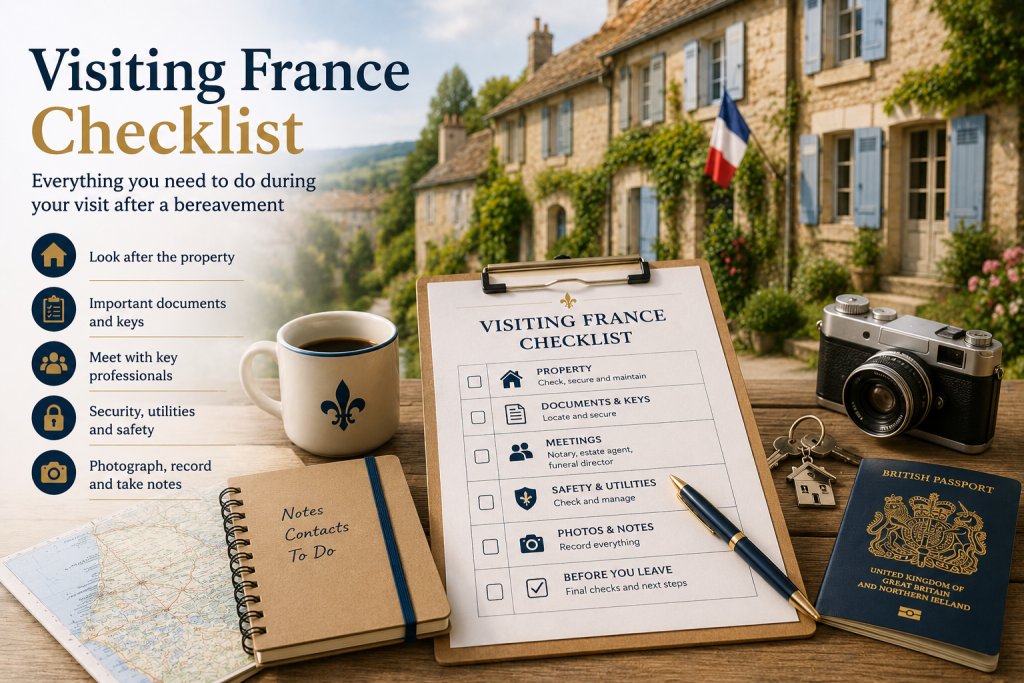
If you’re travelling to France following the death of a loved one, it’s easy to feel overwhelmed and forget important tasks. This checklist is designed to help you make the most of your visit, particularly if you don’t know when you’ll next be able to return.
Not every item will apply to every succession, but it’s worth reviewing the list before you travel.
Before You Travel
☐ Arrange travel and accommodation.
☐ Contact your French notary to arrange a meeting.
☐ Arrange to meet the funeral director if required.
☐ Arrange to meet the estate agent if you intend to sell the property or require valuations.
☐ Confirm access to the property and collect any keys.
☐ Bring identification and any documents requested by the notary.
☐ Take copies of important paperwork (will, death certificate, passports, powers of attorney, etc.).
☐ Take a camera or ensure your phone has plenty of storage.
☐ Bring basic cleaning supplies, gloves and rubbish bags if the property has been vacant.
First Arrival at the Property
☐ Photograph the outside of the property.
☐ Photograph every room before moving or removing anything.
☐ Record the condition of valuable items.
☐ Locate important documents.
☐ Locate spare keys.
☐ Check for signs of forced entry.
☐ Check all external doors and windows are secure.
☐ Consider changing the locks if others may still hold keys.
Utilities & Safety
☐ Check for running water or plumbing leaks.
☐ Check electricity is safe and functioning.
☐ Check the boiler or hot water system.
☐ Turn off unnecessary electrical appliances.
☐ Empty the refrigerator and freezer.
☐ Remove household rubbish.
☐ Check smoke alarms.
☐ Check carbon monoxide alarms where fitted.
☐ Check for damp or mould.
☐ Look for evidence of rodents, insects or hornets’ nests.
☐ Ventilate the property if appropriate.
Property & Maintenance
☐ Inspect the roof for obvious damage.
☐ Check gutters and downpipes.
☐ Inspect fences, gates and boundaries.
☐ Look for broken windows.
☐ Check outbuildings, garages and sheds.
☐ Mow or arrange maintenance of overgrown gardens if necessary.
☐ Arrange emergency repairs if required.
☐ Record utility meter readings (electricity, gas and water).
☐ Take photographs of any damage for insurance purposes.
Documents & Valuables
☐ Locate passports and identity documents.
☐ Locate wills or testamentary documents.
☐ Locate title deeds if available.
☐ Locate insurance policies.
☐ Locate recent bank statements.
☐ Locate tax documents.
☐ Locate vehicle registration documents.
☐ Locate jewellery, cash and other valuables.
☐ Store important documents securely.
Vehicles
☐ Locate all vehicle keys.
☐ Photograph each vehicle.
☐ Record registration numbers and mileage.
☐ Check insurance documents.
☐ Arrange secure storage if necessary.
Meetings
☐ Meet with your French notary.
☐ Meet with the funeral director.
☐ Meet with the estate agent.
☐ Obtain property valuations if required.
☐ Speak to neighbours or the property manager if appropriate.
☐ Ask local tradespeople for quotations if repairs or clearance are needed.
Before Leaving France
☐ Lock all windows and doors.
☐ Turn off water if recommended.
☐ Turn off electricity where appropriate.
☐ Leave heating or frost protection on if necessary.
☐ Return keys to the estate agent or another trusted person if agreed.
☐ Confirm who will periodically check the property.
☐ Ensure buildings insurance remains in force.
☐ Take a final set of photographs.
☐ Make notes of everything completed during your visit.
☐ Keep receipts for travel, repairs, cleaning and other estate-related expenses.
Helpful Tips
- Don’t throw away paperwork until your notary confirms it is no longer needed.
- Take far more photographs than you think you’ll need—they can be invaluable months later.
- If selling the property, ask the estate agent what documents they’ll require so you can begin gathering them immediately.
- If the property will remain empty, check your insurance policy carefully, as many insurers impose conditions on unoccupied homes, such as regular inspections.
- Keep a notebook (or our French Succession Workbook) with dates, contacts and every action you take. It can save considerable time later when speaking to your notary or other professionals.